Showing posts with label Steven Spielberg. Show all posts

Monday, August 19, 2024

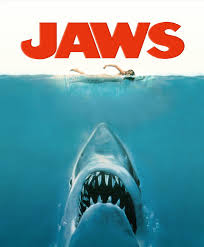
"JAWS" - Book vs. Movie

 THE BOOK


vs.

THE MOVIE


Back in 1970 or so,  Peter Benchley, a former speechwriter for Lyndon Johnson, and now a freelance writer, saw a story in a newspaper about a shark attack on humans near Long Island.  Intrigued, he clipped the story and carried it in his wallet.  Benchley was both the son and grandson of literary men, and he was an aspiring novelist himself, and he kept kicking around the idea of writing a "shark story".  Long story short,  Benchley struck a deal with Doubleday to publish what would be Benchley's first novel, "Jaws".  

The book was released February 1974 with low expectations.  What first novel ever became a best seller, right?  Well, "Gone With The Wind" did, but that was about it.  Funny thing, though, the book caught on, and even before it began its climb up the best seller lists Bantam bought the paperback rights for $500,000 and Universal Studios bought the movie rights for $150,000.   When the paperback edition was published in 1975, it ended up selling over nine million copies, and it seemed that just about EVERYONE was reading it, including a 23 year old, pre-Grandstander Bob Sproule.

Universal, meanwhile, had assigned some 27 year old kid, a guy with one feature film on his resume, named Steven Spielberg to direct the movie version of the book.   The rest is movie history.  When the movie was released in the Summer of '75 people stood in lines around the block to see it, and the concept of a Summer Blockbuster Movie was born.  If Everybody had read the book, Everybody and their Mothers, Fathers, Sisters, and Brothers went to see the movie.

So what's prompting this Blog Entry?

Well, last month on the 4th of July, I thought it would be  terrific idea to pull out my BlueRay Disc of "Jaws" and watch it once again.  This was, I felt an especially good idea since Linda had never seen the movie, a fact that I couldn't believe.  Shortly after that viewing, I saw a  Kindle Deal of the Day email that offered an e-version of Benchley's original novel for $1.99, so I snapped it up.   While I had seen the movie many times, I had only read the book once, and that was forty-nine years ago.  As I have alluded to many times in this forum, reading a book or seeing a play or movie many years after the first time  can offer a different perspective on the work in question, and I wanted to see if, like the movie, the novel has "held up" fifty years after it's publication.

It would also offer yet another opportunity to answer the age old question, What was better, the book or the movie?  

SPOILER ALERT: At this point I will tell you that there will be spoilers in the following paragraphs.  If you've neither read the book nor seen the movie, but want to do so, then don't say that you haven't been warned.

In researching for this piece, I found an article by Benchley written in 2004 where he said that the movie folks told him early on that it was the punk kid director's wish to do away with the "mafia and sex stuff" from the book and just make a movie that was an all out suspense thriller.  Benchley said, in effect, what the hell, once Universal bought the rights, it was their property to do with what they wanted.

Sex stuff?  I do remember that in the book, Chief Brody's wife Ellen had an affair with Matt Hooper, but I couldn't remember the context.  Turns out that Ellen came from a rich summer family that came to Amity every summer, and that she "married down" when she married Brody, an Amity townie (not a transplanted NYC cop as he was in the movie) who had been on the police force his whole career.  She was at a point in her life where she was questioning her life decision and missing her days as one of the summer people elite.  Oh, she loved Brody and her kids, but, man, there just HAD to be more that being a cop's wife in tourist town.   Matt Hooper, the shark expert sent down by the Woods Hole Oceanographic Institution, turns out to also come from a summer elite family, and was, in fact, the ten years younger brother of a guy that Ellen used to date!  Well, you could see what was coming a mile away, but the affair turned out to be a one time nooner in  cheap Ling Island motel, and in the end, Ellen realized that in Martin Brody, she really did have the life that she wanted.

Mafia stuff?  Remember Mayor Larry Vaughn, played so perfectly smarmy by Murray Hamilton in the movie?


Remember how he kept saying that they just COULDN'T close the beaches for the 4th of July Weekend, because, well, Amity was tourist town nd the residents depended on people flocking to it's beaches.  If there were no tourists, the residents would be unable to survive for the other nine months of the year.  It would be an economic catastrophe.

Well, that lesson in tourist town economy is still very much a part the novel.  Mayor Larry is also a real estate broker, so his income is dependent upon lucrative summer rentals, but it also turns out that Larry was involved in some shady land deals, stemming from a loan he had to take out years earlier from some loan shark Mob guys to help pay for his wife's medical expenses.  It was contrived and cliched and the denouement of this element of the plot was wrapped up by Benchley in a couple of paragraphs almost as an afterthought.

Oh, and disappointingly, in the novel Mayor Vaughn did not utter that line, "Amity, as you know, means friendship."

The three main characters from the movie are, of course in the book:

Chief Martin Brody.  The book version of Brody is, as noted, a lifelong Amity resident, not a transplanted New Yorker.  He understands the economics that drive the town, and, unlike Roy Sheider in the movie, he is willing to hush up some lawlessness in order to avoid publicity that could ruin a summer (a series of rapes from the prior year, for example).  He even agrees to leave the beaches open and stay quiet about Crissie Watkins' ill-fated midnight swim.

Matt Hooper.  Unlike Richard Dreyfuss' Hooper, the guy in the book was not at all likable.  A know it all punk kid, who thinks nothing of boffing the police chief's wife.  The novel's Hooper meets a different fate than the Dreyfuss Hooper, and you don't really feel bad about it at all.

Quint.  The hardboiled, hard scrabble fisherman who offers to kill the shark that has been demonizing Amity, if they pay him twice his going rate.  He is still concerned only about his money, still can barely tolerate the two goofs, Brody and Hooper, who insist on being on his boat with him.  He is not as introspective as Robert Shaw's version was (and by the way, how is that Robert Shaw WASN'T even nominated for a Best Supporting Actor Award that year?)  There is no USS Indianapolis speech in the book.  In the ultimate climax of the battle between boat/men and shark, this Quint becomes an almost cardboard character spewing profanities it the great white.

As for the movie, I wrote about it in a post on July 9, 2017:

When Spielberg agreed to do the movie - and he was only 27 years old at the time, let that fact sink in on you - his vision was that the shark should not be seen by the audience for at least the first hour of the film.  This would build suspense to the point that you would leave you seat when you did see it, and, yes, I STILL jump when that shark puts his head out for the water as Roy Scheider lays out that chum line.

Two lines of dialog from that movie have made their way into the current vernacular to the point that many people who use them may not even realize from whence they came:

  • "This was no boating accident." To be used when presented with a set of facts and suppositions, often in the work place, that are obviously pure unadulterated bullshit.
  • When confronted with a seemingly insurmountable obstacle, either at home, with your family, or in the workplace, who among us hasn't said "We're going to need a bigger boat."


So, what was better, the book or the movie?  As you can probably tell, I believe that Spielberg made the correct decision to eliminate the "sex and mafia stuff" and gave us a movie that is as fresh, and as terrifying, as it was when it first appeared in theaters almost fifty years ago.   The book is a good read, and maybe I've just seen the movie too many times to appreciate Benchley's book as I did when I first read it in 1975.  It's a Grandstander Three Star book, but the movie is a full blown Four Star movie.

Post Script:  After seeing it for the first time, what did Linda think?  She didn't like it, so what do I know?


Sunday, January 21, 2018

Two Movies and a Blackout

It was an interesting 36 or so hours this past Thursday and Friday that saw us seeing two movies and experiencing one significant inconvenience.

Let's take them in chronological order.

Thursday afternoon we saw the newest from director Steven Spielberg, "The Post".

For those of you too young to remember, or who have just plain forgotten about it, vey simply stated this is the story of the top secret documents back in 1971 that were leaked to the New York Times by Daniel Ellsberg, the documents that came to be known as the Pentagon Papers.  The Papers discussed the mishandling and misleading (a nice word for "lying") by four Presidential administrations about the conduct of the United States in the Viet Nam war, and the conduct of a fifth Administration in subverting the first amendment.

Ellsberg first leaked the papers to the Times, and the Times published them.  The Nixon Administration then enjoined the Times from continuing to publish them.  At the same time the Washington Post came into possession of the Papers, and they had to make a decision as to whether or not to publish them themselves.  This was at a critical time for the Post, which was in the process of going from a privately owned family business to a publicly traded company.  It fell upon publisher Katherine Graham and editor Ben Bradlee

The real Ben Bradlee and Katherine Graham

to make the decision:  Inform the public and defend the first amendment of the Constitution, or knuckle under to a bullying  President and all of his men.  The whole issue went before the Supreme Court, who ruled in favor of the Times and the Post, and, it might be argued, the American people.

The movie is well made and suspenseful, even though you know how it is going to end.  And it gives a great feeling for how it is, or at least how it used to be, to work at a newspaper (the building would literally shake when the presses that produced the newspaper would begin to run).  We attended this movie with friend Barb Vancheri, retired Film Critic for the Post-Gazette, and she said seeing the stories being written, the editorial meetings, and the actual production of the paper made her miss her job!

Attention must be paid to the terrific performances of Meryl Streep and Tom Hanks in the roles of Graham and Bradlee.


Is it a surprise to anyone that they were both terrific in their roles?  A scene where Streep as Graham is talking on the phone and wrestling with the publish-or-not-publish decision is worth the price of the movie and is probably why she will get yet another Oscar nomination.  As for Hanks, he may suffer by comparison to Jason Robards, Jr. who played Bradlee in "All The President's Men", which is certainly understandable, but also unfair to him.  

The issues underlined in "The Post" are, sadly, still all too relevant in 2018, which makes this movie almost mandatory viewing for the civic minded among us, but it is also an exciting and dramatic bit of movie making.  And it also might compel one to rewatch the great "All The President's Men", never a bad thing.

Four Stars from The Grandstander.

********
"The Post" was pretty much going to be our movie going activity for the week, but along about midnight, electric power for much of McCandless and Franklin Park, about 2,500 homes, was lost.  Have any idea of just how dark  it gets when all of the various nightlights and luminescent clock dials in you home suddenly go out?  Or how cold it gets inside when it is subfreezing outside?

Well, the public utility that serves us told us that power would be restored by 1:00 PM, then it was 4:30, then it was 6:30, then it ws 8:30.  We were this close to packing up and heading to a local hotel when at 7:17 PM, we heard the fridge click on, and an instant later the lights came on and the furnace began running.  It was an unpleasant experience, but it made us grateful for how we live, and appreciative of what we have and sad knowing that there are folks out there who don't have such everyday conveniences at their disposal.

********
So what do you do when it's too cold to stay in your home.  We went out for breakfast.  We had separate lunch dates with friends, Marilyn went to the Mall, and then we decided to go to another movie.  

The choice:


If you were around in 1994, what became known as the "Harding-Kerrigan Affair" is well known to you, but it can be shocking to think that for people under the age of thirty or so, the story told in "I, Tonya" is probably completely unknown to them.

Tonya Harding came up through a hard scrabble upbringing in Oregon to become a world class figure skater.  She competed in the 1992 Olympics, became the first woman to ever perform a triple axle in competition, became the American Champion, and on her way to competing in the 1994 Olympics, her chief competitor, Nancy Kerrigan, was knee-capped at the behest of her husband and some of the gang-that-couldn't-straight entourage that surrounded her.  Was Harding complicit in the attack?  She still says, no, but even after seeing the movie, you still don't know whether to believe her or not.

One thing you know for sure is that she was the victim of an abusive mother.  Played by Allison Janney (a sure fire Oscar nominee), this lady brings new dimensions to the term "evil stage mother" and also to the term "foul-mouthed", for that matter.  She is just an awful person, almost hard to watch, but Janney is brilliant in the role.  Harding was also victimized and abused by her husband Jeff Gillooly, played by Sebastien Stan, whose name became a verb, as in, "to Gillooly someone".  Also terrific in this movie is actor Paul Walter Hauser who plays Shawn Eckert, Gillooly's loser friend who "masterminds" the whole Kerrigan attack.

But the real star of the movie is Margot Robbie who plays Tonya Harding.

Robbie as Harding (L) and 
Harding herself (R) in competition

She plays Harding as both a victim and a victimizer.  She pulls off the skating sequences, which were brilliantly filmed, very well.  She was brilliant in this role.  Watch the changes in her eyes and her face in one scene where she applies her own make-up prior to skating.  A simply marvelous performance.

At times this movie was hard to watch, and as far as language is concerned, it is for sure hard to listen to at times, but great performances by Robbie and Janney, and a terrifically written and filmed story (directed by Craig Gillispie) make this well worth seeing.

Four stars from The Grandstander.

By the way, both Harding and Gillooly were interviewed by screenwriter Steven Rogers in preparation for this movie, so one would think that what we are seeing is authentic.  And we know for sure that Robbie and Harding were in touch with each other, at least at various red carpets in relation to the release of the movie, as evidenced below.

Harding and Robbie on the red carpet

Monday, September 25, 2017

In The Area of Critical Commentary - Beautiful, E.T., The Big Sick

Random Critical Commentary.....


I didn't want to let too much time pass before talking just a bit more on "Beautiful, The Carole King Musical" that we saw last week on our one day visit to New York City.

The play has been running on Broadway for over four years and has also begun touring nationally.  It tells the story of singer-songwriter Carole King, her life and romance with husband and collaborator Gerry Goffin, and, to a lesser degree, fellow songwriters Barry Mann and Cynthia Weil.  The music that they wrote was the music of a generation that has spanned from the late 1950's and into the 1970's.  If you are my age, there is a good chance that you owned King's seminal album "Tapestry" in your youth, and you no doubt still have it stashed away on one of your digital play lists.

The show was fun, lively, wonderfully performed and acted by the entire cast.  This is a show that will undoubtedly be performed on the High School Musical circuit in the years ahead, even though today's high school  students probably have no idea who Carole King is.  It has everything that would make it perfect for high schools - great songs, lots of dancing opportunities, and a large cast.

A week before we saw the show, actress Chilina Kennedy returned to the title role.  This is Ms Kennedy's second run as King in the show on Broadway, and while she did not originate the role, she has played the part longer than any other actress on B'way, and she has toured with the show as well.  She bore an uncanny resemblance to the young Carole King, and she was simply terrific in the part. Her Playbill bio lists a lengthy summary of her acting credits.  Like many actor and performers from the New York theatrical scene, she is no doubt unknown throughout most of the country, but she is amazingly talented, as was the entire cast of "Beautiful".  

Shortly after we returned home, I purchased the Original Cast Recording of "Beautiful", so I can return to this wonderful show again and again, and I hope that I will have the opportunity to see it on stage again someday.

Chilina Kennedy

********

Last week we took in Steven Spielberg's 1982 classic, "E.T., The Extra-Terrestrial" as a part of the TCM Big Screen Classic series.  The movie was as delightful now as it was 35 years ago, and I was glad to have the chance to watch it once again.  While it was an amazing technical achievement when released, you could see how it might be different and perhaps a bit jazzier if made today, given the advances in CGI and other movie making technology. I hope, however, that no one ever attempts to remake this one.  It is just about perfect as it is.  Similarly, I am glad that Spielberg never chose to make a sequel to it.  It was a huge money-making hit, so there were no doubt offers for him to do so.

My buddy, Dan Bonk, asked me if anyone in that movie went on to become a big star.  The obvious answer to that question was Drew Barrymore.  She was six years old when she played little sister, Gertie, and could not have been cuter.  She has gone on to star in, produce,  and even direct feature films in the thirty-five years since "E.T."

The real child star of "E.T.", though was eleven year old Henry Thomas, who played Elliott, the boy who found and befriended E.T.  Thomas never became a big star, but he has steadily worked in movies and television ever since.  IMDB show 62 acting credits for him.  Perhaps the most well known films in which he has appeared were "Legends of the Fall" (1994) and "Gangs of New York" (2002).  In 1990, he played a young Norman Bates in a TV movie called "Psycho IV: The Beginning", and in 1982, the year before "E.T." was released,  he and Joe Greene played the title roles  in "The Steeler and The Pittsburgh Kid", a TV movie based on Greene's famous Coca-Cola commercial.

Barrymore and Thomas (with Spielberg)
Then and Now

********

Last night we once again watched "The Big Sick", this time on DVD.  When we saw this movie this past summer, I said at the time that it was the best movie that we had seen thus far in 2017, and seeing it again last night only reinforced that opinion.  If you have not seen it, please do so soon.  It is a terrific movie.


It is also worth seeing for the truly wonderful performance of Holly Hunter, who plays the mother of Emily.  Hunter's performance is one of the best acting performances that I have seen all year, and she surely deserves an Academy Award nomination for Best Supporting Actress in this one.

Thursday, August 31, 2017

Upcoming Movie - "The Papers"

The Pittsburgh Post-Gazette  carried a feature article in is entertainment magazine this morning that previewed the upcoming "Fall Movies" scheduled for release in the months ahead.  Summaries of sixty movies were included, many of which will fall into the "don't wanna see it" category for me.  

However, there was one movie, scheduled to be released around Christmas time, of which I had never heard, and it really grabbed my attention.  It's called "The Papers" and it is about the legal wranglings over the release of The Pentagon Papers back in the early 1970's.  All you youngsters out there can Google that, but here is the synopsis from IMDB: 

"A cover-up that spanned four U.S. Presidents pushed the country's first female newspaper publisher and a hard-driving editor to join an unprecedented battle between journalist and government. Inspired by true events."

IMDB also refers tells you that the name of this movie is "The Post", so apparently the actual title is still up in the air.

It stars Tom Hanks as Ben Bradlee and Meryl Streep as Katherine Graham of the Washington Post, and it is directed by Steven Spielberg.  It also includes such interesting actors as Alison Brie, Carrie Coon, Michael Stuhlbarg, and Matthew Rhys, but is the pedigree of Hanks-Spielberg-Streep that will make this one Must See movie going for The Grandstander.


Mark your movie going calendars for this one, folks.

Sunday, July 9, 2017

Critical Commentary - Two '70's Movies

I have spent some time in recent days watching a couple of movies from the 1970's, and I have come away favorably impressed.

The first is an undeniable classic and may very well be the movie that defined the term "Blockbuster", from 1975, Steven Spielberg's "Jaws".


We've all seen this one, am I right, so I don't really need to tell you what it is about, do I?  One day this past winter I saw Blue-ray edition of "Jaws" in the ten dollar sale bin at Target, and I just couldn't pass it by, and I finally got around to watching it one afternoon this week.  

First off, I was amazed at how beautiful the movie was on Blue-ray.  Since this movie was made at a time when High Definition did not exist, I wasn't sure how it would look on my HD TV, but I needn't have worried.  It was gorgeous, and it was almost like seeing a brand new movie for the first time.  (How do they do that??) Secondly, and even more importantly, the movie still packs the terrifying wallop that it did that first time you saw it back in '75.

When Spielberg agreed to do the movie - and he was only 27 years old at the time, let that fact sink in on you - his vision was that the shark should not be seen by the audience for at least the first hour of the film.  This would build suspense to the point that you would leave you seat when you did see it, and, yes, I STILL jump when that shark puts his head out for the water as Roy Scheider lays out that chum line.

Then there are all of the extras that appear on the Blue-ray disc.  Hours and hours of them, including a two hour 1995 documentary called "The Making of Jaws", and I am still working my way through them.  

Two lines of dialog from that movie have made their way into the current vernacular to the point that many people who use them may not even realize from whence they came:

  • "This was no boating accident." To be used when presented with a set of facts and suppositions, often in the work place, that are obviously pure unadulterated bullshit.
  • When confronted with a seemingly insurmountable obstacle, either at home, with your family, or in the workplace, who among us hasn't said "We're going to need a bigger boat."
If you are a fan of this movie, or if in the unlikely event you have never seen it, seek out and pick yourself up a copy of the "Jaws" Blue-ray.

********
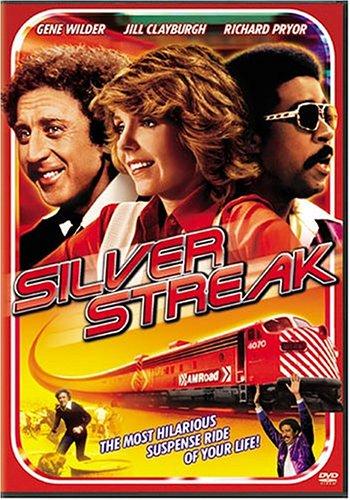
The second movie was Arthur Hiller's 1976 comedy "Silver Streak".


I remember going to the theater to see this one when it was released - and for all you youngsters out there,that was the only way you could see a movie back in 1976 - and enjoying it a lot, but I know that I had not seen it since.  I was prompted to watch it again because my pal Dan often makes reference to this one, particularly to one specific line of dialog near the end.  

You always wonder how a movie, particularly a comedy, might hold up forty-one years after it's first release, and I am delighted to say that this one was still fresh and still funny.  Not a whole lot of it was dated.  It is sad to note that the three lead actors in this one, Gene Wilder, Jill Clayburgh, and Richard Pryor, are no longer with us, which is all the more reason to watch this one again and enjoy their performances.  Pryor in particular is brilliant in this.  There was also one scene that I had completely forgotten in which Wilder puts shoe polish on his face, at Pryor's urging, to disguise himself as a black guy in order to avoid the cops.  It was absolutely hilarious.

The plot of the story, as if that really matters, involves Wilder taking a three day train trip for Los Angeles to Chicago in order to relax and be "bored for awhile".  On board, he meets a sexy lady in the cabin next door, gets involved with some bad guys, and gets thrown off the train three different times, yet is somehow able to catch up to it and re-board. Implausible and slightly ridiculous, but still outrageously funny.

As I said, Pryor was fabulous in this movie.  I got hysterical when he grabbed the radio while driving a stolen police car, called the sheriff and told him....

Hey Chauncey, this is Grover T. Muldoon. You wanna know what happened? We just whooped your ass. We whooped your ass. Ha ha ha!

This movie also gives you he opportunity to see, in a bit part near the end of the movie, a very young Fred Willard.

Lots of funny stuff in this movie, including a classic line from Scatman Crothers, which I will save for use when we take our own train trip to Chicago later this year.

All in all, two very worthwhile trips back into the 1970's this past week for The Grandstander.

Friday, October 23, 2015

Movie Review: "Bridge of Spies"

The Pittsburgh Post-Gazette's film critic Barbara Vancheri began her review of "Bridge of Spies" with this simple sentence:

"No one does decency like Tom Hanks."

That, in a nutshell, is why this movie from director Steven Spielberg works so well and is so good.  Tom Hanks.

Of course, there is more to it than that.  There is a terrific story.  In the height go the Cold War, insurance lawyer Jim Donovan (Hanks) is selected to defend a man accused of being a Soviet spy.  Everyone, including the judge in the case, wants a perfunctory trial, a quick conviction, and, it is hoped, and even quicker execution.  Donovan, of course, thinks that a trial should be just that - a fair and impartial hearing in accordance with the U.S. Constitution.   As a result of his stand, Donovan becomes a pariah of sorts to his colleagues, his government (great line from a CIA agent: "Don't go boy scout on me, Counselor."), the people with whom he takes the morning train, and even his own family.

But everything changes when an American, U2 spy plane pilot Francis Gary Powers, is shot down over Soviet airspace, paraded before the world, and tried and convicted as a spy and sentenced to ten years of USSR-style imprisonment.  Just as Donovan predicted, a plan is hatched to exchange Rudolf Abel, the spy that Donovan defended, for Powers, and to whom does the CIA turn but lawyer and negotiator Jim Donovan to make the deal.  The whole process of the Powers-Abel exchange is complicated when Donovan learns that an American student who was in the wrong place at the wrong time has been arrested in East Berlin and charged with espionage by the East German government.  Donovan thinks that this kid should be a part of the deal, too, and I will say no more.


For all you youngsters out there, this is a true story based on actual events.  I am old enough to remember the "U2 incident", as it came to be known, and the Cold War paranoia of those times.  No one can create a mood and paint a picture of an era better than Spielberg, and his images of a cold and snowy East Berlin in 1961, still devastated by the damages of World War II bombings, really bring home the bleakness and fear of that era.  

And as for Hanks, well, he delivers again.  He is a Cold War version of Attticus Finch in this one, doing what he knows to be right while all the while realizing the horrors of the situation that circumstances have thrust upon him.  Plus, he has this damn cold and all he really wants is to get home and sleep in his own bed.  Who can't relate to that?

We are in that time of the year when Hollywood releases what it deems to be its best pictures, the ones that will rack up all the Oscar nominations and awards.  Not sure how many nominations, if any, "Bridge of Spies" will receive, but I can tell you that both Hanks and Spielberg, multiple Oscar winners and nominees in the past, remain at the top of their games in this one.

Four stars from The Grandstander on this one.


Saturday, November 17, 2012

Movie Review: "Lincoln"


A week ago I wrote that after all the hype, and considering the high powered talent involved in making this movie, if it was anything less that terrific, it would have to be considered a disappointment.  I am now here to tell you that  no, it is most definitely not a disappointment, and yes, it is terrific.

The movie centers on a relatively brief, but tremendously important and historic time during President Lincoln's administration - the time following his reelection in 1864 and prior to his inauguration in March, 1865, when he sought to get the 13th amendment to the Constitution passed by the House of Representatives.  Yeah, this is a movie about a piece of legislation.  How boring can you get, right?  Considering all that was involved: abolishing slavery, ending the Civil War, a President dealing with a bunch of recalcitrant Congressmen, and even some recalcitrant cabinet members, this becomes a real political thriller.  The movie is two and one-half hours long, but is so totally compelling and mesmerizing, that it goes by in the proverbial blink of an eye.

Of course, one bad thing about this movie is that it may take away all sense of drama and suspense come Academy Awards night.  Expect nominations for the Best Picture, director Steven Spielberg, screenwriter Tony Kushner, and, of course, actors Daniel Day-Lewis, Tommy Lee Jones, and Sally Field, and probably a few others who might deserve nods, but might be crowded out like David Strathairn and James Spader, not to mention all of the technical awards nominations it will no doubt receive.  I wish I could take credit for this line, but I will quote Post-Gazette critic Barry Paris who said that Day-Lewis looks like he stepped right off of a five dollar bill to play Abe Lincoln.  An absolutely amazing and terrific performance.  Of course, there is no film footage of Abe Lincoln, but I imagine that this representation is exactly what he was like.

Great movie.  Do not miss it.


Friday, September 7, 2012

An Early Oscar Prediction


This morning's Post-Gazette featured a preview of the Fall movie releases, and one in particular caught my eye:  "Lincoln".  It is a serious movie about our 16th President.  It is based on Doris Kearns Goodwin's award winning book, "Team of Rivals".  It stars Daniel Day-Lewis, who makes a movie once every three or four years, but when he does, he usually wins an Oscar, and it is directed  by Steven Spielberg, who is, well, STEVEN SPIELBERG.  

Do we really need to even have an Academy Awards ceremony next winter?